

You do not need three weeks off to travel well.
You need a destination that rewards focus, a plan that protects your energy, and enough confidence to leave a few things unseen.
That approach matters more than ever. Airbnb’s Fall 2026 data reports that 60% of travelers are planning shorter trips, with fall overtaking summer as the preferred season for weekend getaways. Instead of waiting for the perfect long vacation, more people are building travel into ordinary life through compact, experience-rich escapes.
A three-day trip will not let you see everything. That is the point. It can help you notice more.
Here is how to make a long weekend feel like real travel, not a frantic tour of landmarks.
Start with the right definition of “nearby”
For a three-day trip, distance matters less than friction.
A destination may be only 300 miles away, but if it requires two connections, a rental car pickup across town, and a late-night arrival, it is not genuinely within reach. Conversely, a slightly farther place with a direct train or flight may be much easier.
Use this rule:
For a three-day trip, aim to spend no more than four to five hours traveling each way.
That gives you a useful search radius without treating travel time as dead time. A direct flight, a scenic train, or a road trip with one worthwhile stop can all work. Multiple transfers and complicated border crossings usually do not.
When choosing a destination, look for four things:
- A compact center: You should be able to explore a neighborhood, town, or small region without crossing an entire metro area.
- One standout experience: A waterfall hike, local food scene, historic district, festival, or unusual landscape.
- A strong local identity: The best short trips have a clear sense of place.
- Reliable logistics: Frequent transport, easy check-in, and activities that do not depend on perfect weather.
Our Shenandoah National Park guide is a good example of the short-trip mindset: one trail, one waterfall, and enough surrounding landscape to turn a simple stop into a memorable escape.
Choose one anchor experience per day
The fastest way to ruin a weekend is to treat every recommendation as an obligation.
Instead, choose one anchor experience for each full day. This is the non-negotiable part of your itinerary. The reason you picked the destination in the first place.
Your anchors might be:
- A sunrise hike
- A neighborhood food tour
- A museum or historic site
- A coastal bike ride
- A live music show
- A local market
- A scenic drive
- A village, canyon, or viewpoint outside the main city
Then build everything else around it.
A useful structure looks like this:
Day 0: Arrive and get positioned
Travel after work on Thursday if possible. The goal is to wake up on Friday already in the place you came to experience.
Keep arrival night simple:
- Check in
- Walk around your immediate neighborhood
- Eat somewhere casual
- Buy breakfast supplies
- Go to sleep
Do not schedule a major attraction for the evening you arrive. Delays happen, energy levels vary, and a relaxed first night makes the rest of the trip feel longer.
Day 1: Get oriented
Use your first full day to understand the destination rather than conquer it.
Pick one anchor experience for the morning or afternoon. Leave the other half of the day open for wandering. Walk through a market, sit in a busy square, follow an interesting side street, or ask a local where they would go for dinner.
This is often the day when a place starts to feel real.
Day 2: Go deeper
Day two is your best opportunity for contrast. If day one was urban, choose nature. If day one was history, choose food or music. If day one was physically demanding, slow down.
Pick a second anchor experience, then spend the rest of the day close to it. Avoid wasting hours crossing town just to collect another recommendation.
Day 3: Leave room for a final impression
Do not treat your final morning as packing time with a pastry attached.
Have one last local breakfast, take a short walk, revisit a favorite place, or choose a viewpoint that does not require a complicated journey. If possible, book a return journey in the afternoon or evening rather than first thing in the morning.
You are not trying to squeeze in another full day. You are giving the trip a proper ending.

Build around neighborhoods, not attractions
A checklist makes every destination look like a collection of disconnected errands.
Neighborhood-based planning creates a trip with rhythm.
Instead of writing down ten places across a city, choose one area for each day and group nearby experiences together. Start with breakfast, walk to a market or gallery, stop for coffee, visit one major site, and finish with dinner nearby.
This approach gives you:
- Less time in traffic
- More spontaneous discoveries
- Fewer decisions during the day
- A better sense of how locals use the place
- More flexibility when weather or energy changes
The goal is not to avoid famous sights altogether. It is to choose them deliberately. One meaningful museum visit can be better than four rushed attractions.
For a history-focused weekend, you might spend one day exploring the core of Athens and another following its food, neighborhood, and contemporary cultural scenes. For an urban weekend in the United States, Atlanta offers a useful model: combine major cultural institutions with local neighborhoods and the city’s deep civil rights history rather than trying to see every attraction in one circuit.
Avoid the checklist trap
Before you book anything, make three lists:
Must do
Choose two or three experiences that would make the trip worthwhile even if everything else changed.
Nice to do
Add a handful of optional ideas. These are useful when you have extra time or need a backup plan.
Not this time
Write down the things you are intentionally skipping. This sounds strange, but it prevents FOMO from taking over once you arrive.
A three-day trip should contain:
- Two or three major commitments
- One flexible half-day
- At least one unplanned meal
- Some time with no destination
That empty space is not wasted. It is where you discover a bakery, talk with a shop owner, follow a street because the light looks good, or simply recover from travel.
Pack for movement, not fantasy
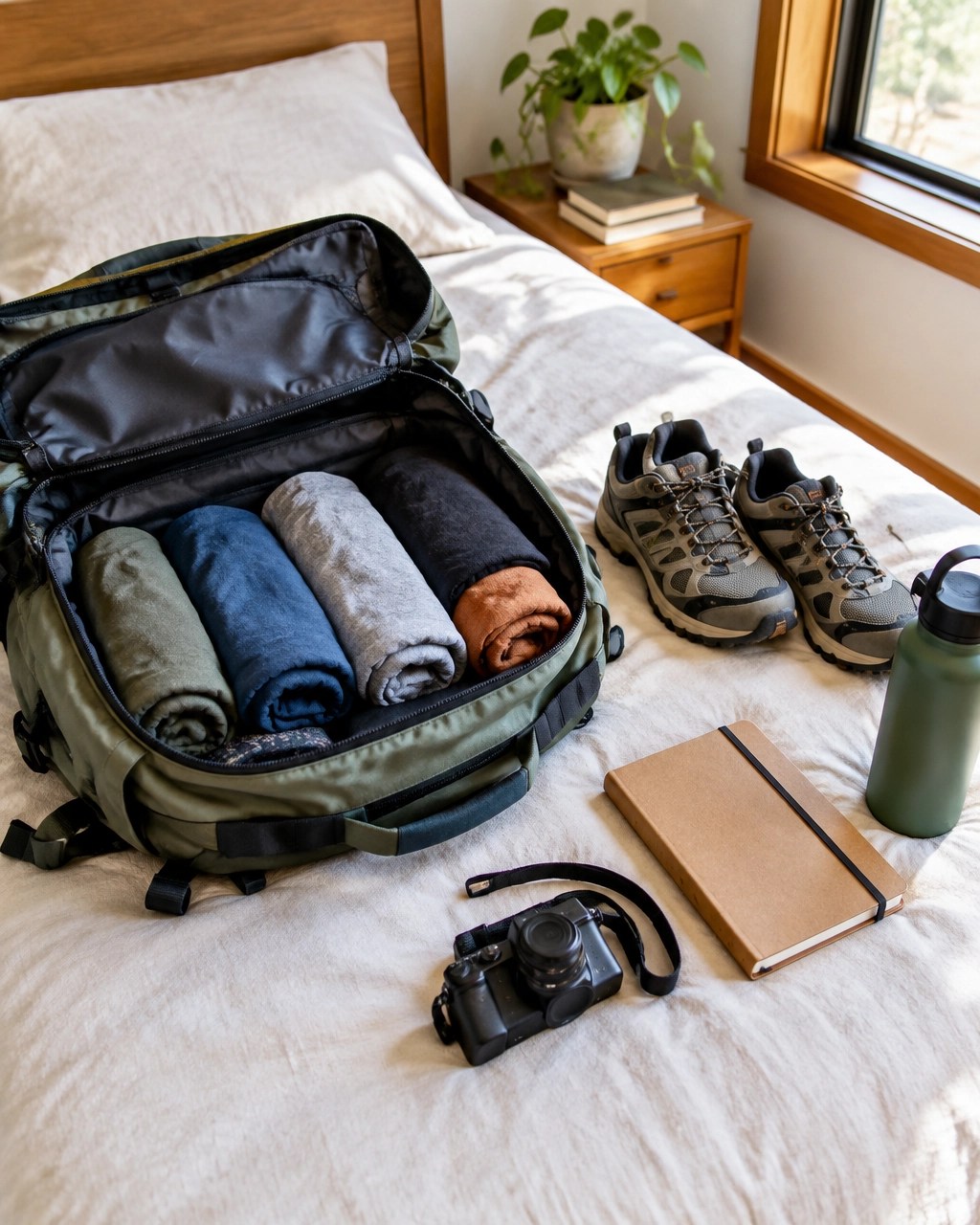
Packing light is not just about avoiding baggage fees. It reduces the number of decisions you make during a short trip.
For most three-day escapes, start with:
- One small backpack or carry-on
- Three versatile tops
- Two bottoms
- One warm layer
- Comfortable walking shoes
- Lightweight sleepwear
- Basic toiletries
- A compact rain layer
- Phone charger and power bank
- Reusable water bottle
Wear your bulkiest shoes and outer layer while traveling. Choose clothes that work for both a café and a trailhead. Check the forecast before leaving, but do not pack for every possible version of the weather.
If your destination requires specialist gear, rent it locally when practical. Carrying equipment you may use once can create more hassle than value.
Book the pieces that remove friction
Short trips benefit from early planning, but not from scheduling every minute.
Book these in advance:
- Transport to and from the destination
- A well-located place to stay
- Timed-entry attractions
- Popular restaurants that are central to your plans
- Special events or guided experiences with limited capacity
Leave these flexible:
- Coffee stops
- Casual lunches
- Neighborhood walks
- Small shops and galleries
- Your second-choice restaurant
- At least one afternoon or evening
Location is often more valuable than luxury for a weekend. A modest room near transit, your chosen neighborhood, or the trailhead can save hours over the course of three days.
Before booking, ask:
- How long will it take to reach my accommodation after arrival?
- Can I walk or use public transportation for most of the trip?
- Is late check-in available?
- What happens if my arrival is delayed?
- Will this location still work if I change one activity?
A good booking removes logistical problems before they appear.
Three concrete three-day itinerary ideas
1. Athens: history, neighborhoods, and long dinners
Day 0: Arrive, check in, and take an evening walk through the neighborhood around your accommodation.
Day 1: Make the Acropolis or another major historic site your anchor. Spend the afternoon exploring nearby streets, then choose a slow dinner rather than a second major attraction.
Day 2: Visit a market or museum in the morning. Keep the afternoon open for contemporary neighborhoods, cafés, and people-watching.
Day 3: Have a relaxed breakfast, take one final city walk, and leave for the airport or station later in the day.
This works because the trip has a clear historical center without reducing Athens to one monument.
2. Shenandoah: trail time and mountain quiet
Day 0: Drive in after work, check in, and prepare a simple breakfast for the next morning.
Day 1: Take the Doyles River Trail toward its waterfalls, then spend the afternoon at a scenic overlook or nearby small town.
Day 2: Choose a second hike based on weather and energy. Keep the evening slow: local food, a campfire, or a dark-sky walk.
Day 3: Have breakfast outdoors, take a short final walk, and return home with enough daylight to reset before work.
The key is to choose one main trail rather than attempting to cross the entire park.
3. Atlanta: culture, food, and neighborhoods
Day 0: Arrive, settle in, and have dinner close to your accommodation.
Day 1: Build the day around Atlanta’s civil rights history and major cultural sites. Leave time to explore nearby streets rather than immediately taking another ride across town.
Day 2: Choose one food, music, or arts-focused anchor. Add a park, market, or neighborhood walk for a change of pace.
Day 3: Start slowly with breakfast, revisit the area you enjoyed most, and schedule an afternoon departure.
This itinerary works because it combines depth with variety while avoiding an exhausting attraction marathon.

Let short trips add up
The deeper advantage of three-day travel is not that one weekend can replace three weeks. It is that several focused weekends can create a richer travel year than one long, blurry itinerary.
One trip can be for hiking. The next can be for food. Another can be built around local history, folklore, live music, or a place you have never heard of before.
You return to work with less disruption, spend money across several intentional experiences, and keep discovering places before they become overrun.
Share what you find with the Awesome Places community, compare notes with other independent travelers, and use those recommendations to shape your next escape.
Three days is enough, if you stop trying to make it feel like three weeks.